
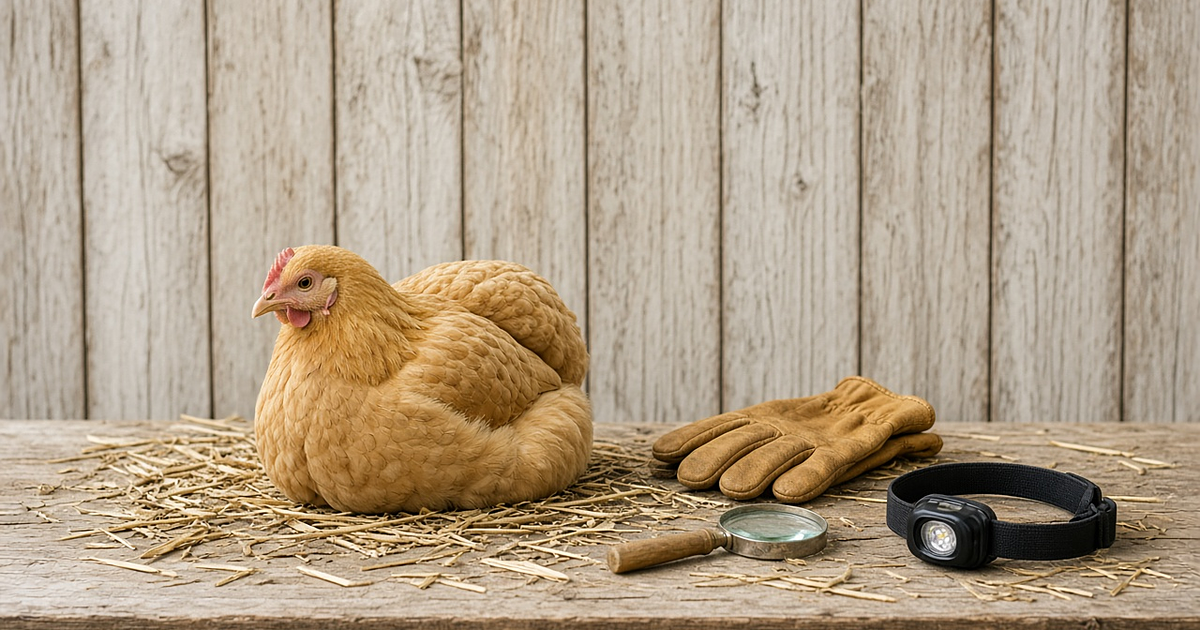
If you just flipped a hen over and found tiny moving specks around her vent, take a breath. You’re not the first keeper to feel overwhelmed by mites. The short answer: figure out which parasite you have, then treat the right place (the bird, the coop, or both), with a product whose label says it is approved for poultry. Guessing from a forum dose is how people get stuck.
This page is a decision tree and a tonight plan, not a diagnosis. I am not a vet. For treatment choices, egg withholding and anything that feels off-label, talk to a poultry vet or your state diagnostic lab. Product rules also differ by state.
Tracy’s take
I’d rather own a cheap kitchen scale and a poultry-labeled dust than a jar of something a forum said to use “like horse paste.” The label is the map. Everything else is a side road.
First: which parasite do you have?
The Extension poultry team’s external parasites page (written for small and backyard flocks) splits the common ones by where you find them. That location is the decision rule.
1. Tiny dark movers around the vent (daytime)
Likely northern fowl mites (Ornithonyssus sylviarum). The Extension poultry team calls them the most common external parasite on poultry, especially in cool weather. They are blood feeders. Heavy loads can leave birds anemic, with lower egg production and feed intake. They also bite people.
What to look for: mites are about 1/25 inch, eight-legged, usually black or brown, and move fast on the skin. Eggs and black mite droppings in the vent feathers are often easier to spot than the mites themselves.
2. Birds look miserable, but you see nothing on them by day
Check for chicken mites (red mites / roost mites) (Dermanyssus gallinae). Unlike northern fowl mites, these do not live on the bird. The Extension poultry team notes they hide in cracks, roost joints and nest boxes by day and feed at night. After a blood meal they look red. A mild infestation is easy to miss if you only check birds at noon.
Merck Veterinary Manual says the same pattern: look in nest boxes, cracks and where roost poles meet supports, and on birds at night.
3. White clumps at the base of feathers, restless birds
Likely poultry lice (biting lice such as the chicken body louse). Lice eggs are cemented near the feather shaft and look like a cluster of white particles. The whole life cycle stays on the bird. Lice feed on skin scales and feather debris, not blood, but they irritate birds enough that feed intake and laying can drop.
4. Thick, crusty, raised leg scales
Likely scaly-leg mites (Knemidokoptes mutans). They burrow under leg scales. In severe cases the Extension poultry team notes toes can lose blood supply. Mild cases can look better over time; severe deformity may stay.
If you are not sure, a clear phone photo of the vent, a roost crack at night and a close-up of the legs is enough for a poultry vet or diagnostic lab to point you. Do not wait for a perfect ID before you start basic coop hygiene (clean litter, reduce wild-bird and rodent access).
The decision tree (what to do based on what you found)
- Vent mites by day: plan to treat birds and the house (nests, roosts, cracks). Northern fowl mites prefer birds but can live off them for a couple of weeks.
- Empty cracks by day, pale combs, night restlessness: treat the house first (every crack and crevice), and treat the birds with a poultry-labeled product. Red mites can survive months off the host, so a one-and-done spray rarely works.
- Lice eggs on feathers: focus on treating the birds. Environment still matters, but lice leave a bird mainly to move to another bird.
- Crusty legs: treat the legs as directed by a poultry-safe plan from your vet or extension, and still clean the house. Petroleum jelly or linseed oil on legs is the Extension poultry team’s common homestead step for scaly-leg mites; ask a vet if the case is severe.
Two timing rules that come up again and again in the Extension poultry write-up:
- Re-treat on a short cycle. None of the usual materials kill mite eggs. An egg can become a laying female in less than a week for northern fowl mites. Re-treat about every 4 to 7 days, following the product label.
- Red mites are worse if you only treat once. Their egg-to-adult cycle is about 7 to 14 days, and adults off the host can starve for up to six months. Empty coops can stay infested.
Tonight plan (before you buy anything fancy)
Tonight plan
- Confirm location: vent check in daylight; then a flashlight check of roost joints and nest cracks after dark.
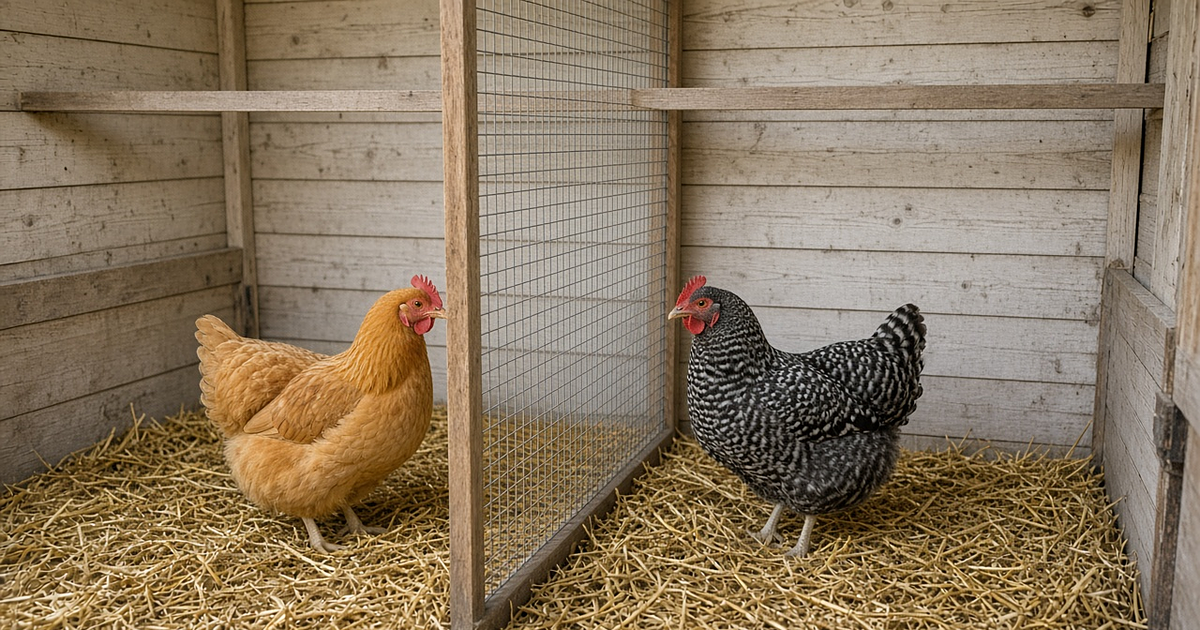
- Isolate if one bird is hammered: a hospital crate reduces pecking on an already irritated bird and makes dusting easier. Quarantine new birds separately for about 30 days when you can (see the sick-bird posts in the plan).
- Strip and clean: pull wet or heavily soiled litter, scrub roosts and nest boxes, and hit cracks. Wear gloves and wash clothes afterward. Northern fowl mites and red mites can bite people.
- Dust bath station: a bin of clean play sand helps birds groom. Food-grade diatomaceous earth can be mixed in as a helper, not a cure (see Skip this).
- Buy only poultry-labeled products: the Extension poultry team names examples such as Prozap Insectrin Dust and PoultryGuard for northern fowl mites, and notes that organic pyrethrum options exist. Read the label for PPE, bird vs premises use, and any egg or meat withholding. Rules differ by state.
Not on the list: horse paste, dog flea vials, or “a little ivermectin I had left.” Those are not backyard shortcuts.
Product safety, in plain English
The Extension poultry team is blunt: any insecticide you use on poultry should say it is approved for use in poultry, and you should follow the label, including protective gear and any withholding time for eggs or meat.
Ivermectin is not approved for poultry. The Extension poultry page states that directly. Merck notes that some uses would be extralabel drug use (ELDU), which requires a veterinarian and documented FARAD guidance. This site will not give an ivermectin dose. If someone online hands you one, that is a red flag.
Merck also notes that food-grade diatomaceous earth and certain inert silica dusts can help when birds dust-bathe, and that DE should only be applied in well-ventilated areas while the person applying it wears a dust mask. DE is not harmless dust to breathe.
Some products are toxic to birds if misused (wrong concentration, wrong animal label, sprayed into eyes or open wounds, or used in a sealed coop with no air). If a bird worsens after treatment, stop and call a poultry vet or your state diagnostic lab.
Skip this
- Food-grade DE alone as a cure. The Extension poultry team says DE in a dust bath may help control mites by damaging their cuticle, but it will not eliminate them because it has no effect on eggs. Using only DE while an outbreak builds is how keepers lose weeks.
- Treating birds once and calling it done. Egg stages survive. Re-treat on the label schedule (often every 4 to 7 days for mite products).
- Checking only at noon for red mites. If birds are pale and restless but clean by day, inspect the house at night.
- Off-label livestock dewormers or cattle pour-ons for mites because a forum said so. Wrong drug, wrong species, wrong residue rules. Ask a vet.
What about worms while we are here?
Mites and worms get mixed together in the same late-night search spiral. Internal parasites are a different problem. The Extension poultry internal parasites page covers roundworms, capillary worms, cecal worms and more, and it sends you to the FDA Green Book for currently approved medications.
One product that is labeled for chickens in drinking water is Safe-Guard AquaSol (fenbendazole). The FDA DailyMed label says: orally via drinking water at 1 mg/kg body weight per day for 5 consecutive days, with medicated water prepared fresh each day. When used according to labeling, no withdrawal period is required. Indications are specific worm species in broilers, replacement birds, breeders and layers. It is not a mite treatment.
That label also requires knowing flock weight. “Guess a gallon dose without a scale” is exactly the gap readers are stuck in. A kitchen scale (or weighing a carrier with and without the bird) is the tool. The step-by-step version, with weighing methods and the full label card, is in Deworming Backyard Chickens Without Guessing.
Common mistakes (so you can skip the long way)
- Buying whatever the feed-store shelf pushed without reading whether it is for birds, premises or both.
- Treating one hen and leaving the rest. Mites and lice move bird to bird.
- Skipping the house when you have red mites or northern fowl mites. Cracks are part of the life cycle.
- Confusing molt or feather pecking with parasites. Check the vent and the night roost before you assume.
- Using the cheap “everyone uses it” product with no poultry label. Same lesson as predator gear: the popular shortcut is often the wrong material. For coops that means hardware cloth instead of chicken wire. For parasites that means a label that names poultry.
When to call a vet or the lab
- Birds are weak, very pale, not eating, or dying.
- You need a product that is not clearly labeled for poultry, or you are being told to use something extralabel.
- Scaly-leg damage is severe, or you suspect a flock-wide disease on top of parasites.
- You want a fecal test before deworming, which is often smarter than treating on a calendar.
Start with a poultry vet if you can find one, or your state veterinary diagnostic lab. For sudden deaths or nervous or respiratory signs in several birds, follow USDA Defend the Flock guidance and your state veterinarian’s reporting rules.
FAQ
Can humans get chicken mites?
Northern fowl mites and chicken (red) mites can bite people and cause itching, according to the Extension poultry team. They do not typically live on people the way they do in a coop. Wash up after handling, and treat the source.
Will a dust bath alone clear mites?
It helps birds groom and can support control when food-grade DE is included, but it is not enough by itself during an outbreak. Pair cleaning, poultry-labeled treatment and re-treatment.
How often should I check for mites?
The Extension poultry team says occasional checks matter because early detection prevents a flock outbreak. A practical backyard habit: vent-check a few birds when you handle them, and do a night crack check if egg numbers drop or birds seem restless.
Is Safe-Guard AquaSol for mites?
No. The DailyMed label is for specific internal worms in chickens, dosed by body weight in water for five days. Different problem, different product.
Featured image: illustrative (AI-generated).

Leave a Reply