
You did the hard part. She’s healed, she’s eating, and you’re ready to have your flock back together. Then you open the door and it goes wrong: she gets chased, cornered, or spends the day hiding in the coop and gets jumped every time she comes out. If that’s where you are, you didn’t ruin anything. A hen who has been gone a while is, to the flock, partly a stranger, and they treat her like one.
The short answer: wait until she’s truly healed, give her at least a week where the flock can see her but can’t reach her, put her back on the roost at night or into a run full of distractions, and pull her out again at the first sign of blood. If careful returns keep failing, a permanent companion pen is a real option, not a defeat. This guide is built from university Extension guidance. I’m not a vet, and if she was sick rather than injured, check with a poultry vet before she goes back.
Tracy’s take
I’d rather spend an extra week with a crate next to the run than spend the next month nursing the same hen again. Slow is the fast way here.
Why the flock turns on a hen they already know
It feels personal. It isn’t. The Extension poultry team notes that adult fights most often happen when a new bird joins the flock or when a bird is reintroduced after a long absence. Chickens keep their pecking order by recognizing each other, and that recognition fades when a bird is gone.
The same Extension page describes older research on returning hens to a flock. Hens whose looks had changed were attacked by the hens that used to rank below them. When a larger group of changed hens went back together, the flock was able to sort out a new order. Two things are worth taking from that. A hen whose feathers have regrown patchy, or who comes back with a different look, may not read as familiar. And a single bird walking back in carries the whole fight on her own.
That also explains the hen who goes back in “guns blazing,” attacks a few birds, then gets ganged up on. She’s acting on the old order. The flock has moved on without her. Some shoving while it resets is normal. Blood, cornering and being kept off food is not.
Step 1: Is she actually ready to go back?
Ready-to-return check
- Skin fully closed. No scab, no open spot, no bare red patch. Blood draws pecking from the whole flock, not just one bully (UNH Extension). A scab is a target.
- Feathers coming back in over any bald area, or at least the skin is no longer pink and raw.
- Eating, drinking and pooping normally on her own, with no special food or help.
- Moving normally. She can jump to a roost, get out of the way and run.
- No leftover medical problem. If she had a prolapse or a messy vent, Penn State Extension notes that when a prolapse leaves tissue exposed, other birds pick at it out of curiosity. Make sure it’s fully resolved first.
- A quick mite check on her and the flock, so she isn’t going back into an itchy, irritable coop. The mites decision tree has the night check.
- If she was sick and not injured, ask your vet whether she’s safe to go back, and keep her chores last until you know.
Any “no” means keep healing. A few more days in the crate costs far less than a new wound.
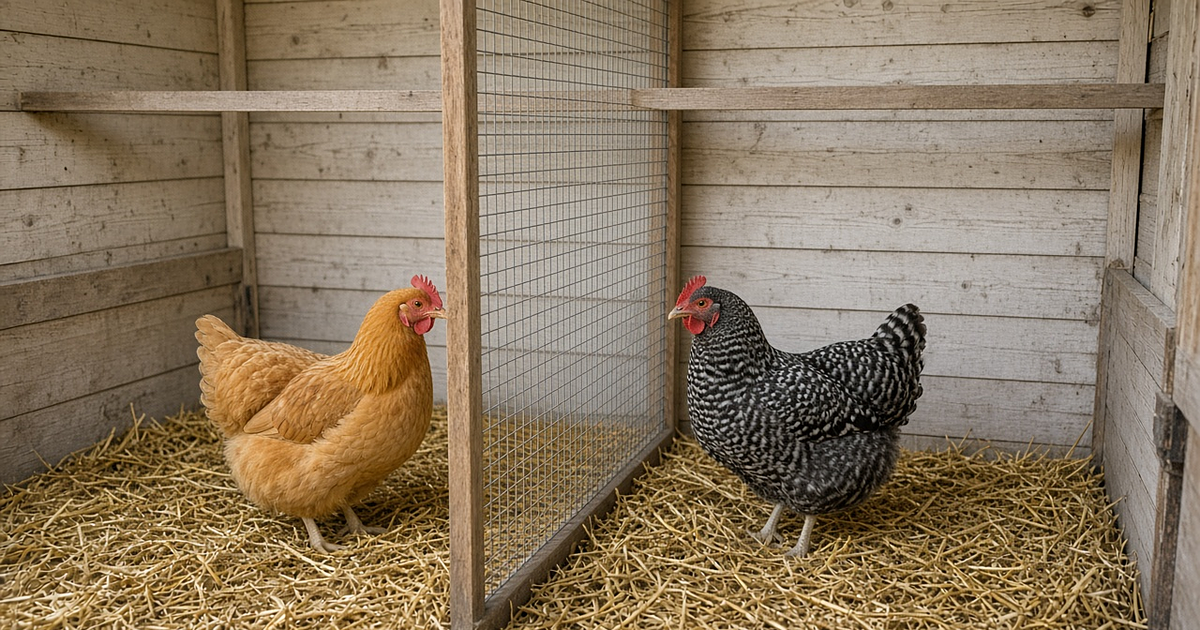
Step 2: The see-but-don’t-touch setup
This is the step people skip, and it’s the one Extension actually spells out. Penn State Extension says the best way to introduce birds to a backyard flock is to split the pen with a wire wall for at least a week so the birds get to know each other. University of Arizona Cooperative Extension describes the same idea with whatever you have: the coop fence, a play pen or a dog kennel she can’t get out of and the flock can’t get into.
Three ways to set it up in a normal backyard
- A divider inside the run. A panel of welded hardware cloth on a frame, fixed top to bottom so nobody squeezes under or flies over. Skip chicken wire here too. It bends, and birds can pull at each other through it.
- A large dog crate or wire kennel inside or right against the run. Give her solid shade on one side so she can step out of view, and her own feeder and water.
- A small hardware-cloth pen beside the run with a covered top and a little shelter. Keep it predator resistant, with the same latch standard as your main coop. A hen alone in a side pen at night is easy pickings for a raccoon.
Wherever she is, she needs her own food, water and a spot out of the wind. Put the feeders near the divider so both sides eat within sight of each other.
What to watch for during the week
- Good signs: birds on both sides eating, scratching or dust bathing near the divider without charging it.
- Expected: some posturing and pecks at the wire in the first days.
- Slow down: one hen who stays at the divider trying to get at her day after day. Give it longer, and watch whether that hen is the problem (more below).
Penn State says at least a week. That’s a minimum, not a deadline. If the flock still acts like she just arrived, add more days before you open the gate.
The number that matters
At least 1 week of wire between her and the flock before any contact, per Penn State Extension. The same sheet says it may take a week or more for the flock to settle a new pecking order after birds are added or removed.
Decision rule: a full week of calm behavior at the divider earns a supervised return. A week of charging the wire earns another week. A week of no change means look at the setup, not the calendar.
Step 3: Choose how she goes back
Option A: Onto the roost at night
Penn State Extension says adding birds to the perch at night can help. After the flock has gone to roost and the coop is dark, set her gently on the roost, ideally between calmer hens and not beside the boss. Then be there at let-out the next morning. Morning, when everyone has been packed together all night, is when you’ll see how it’s really going. Our feather pecking triage also names let-out as one of the peak pecking times.
Option B: Daytime, with a lot going on
Some keepers prefer to open the divider in the late afternoon, close to roost time, when birds are winding down. Make the run busy so attention goes somewhere else:
- Scatter scratch or greens in a few spots so no one hen can guard them all.
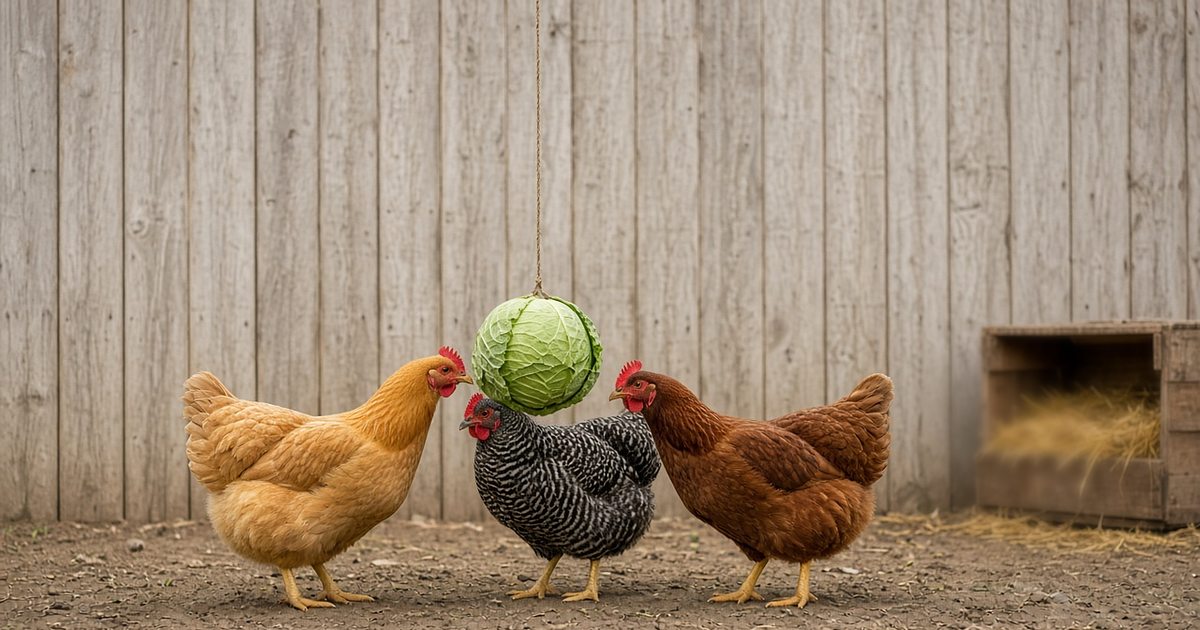
- Hang a head of cabbage or a few lengths of white twine at eye height. The Extension poultry team lists hung twine as an enrichment that redirects pecking.
- Add a second feeder and waterer well away from the first. Penn State notes the lowest birds may never get to eat when feeder space is short, and a returning hen starts at the bottom.
- Break up the open space. University of Maryland Extension suggests leaning a sheet of plywood against a wall so birds can hide behind it. A pallet, a straw bale or a crate with the door wired open works too.
- Make sure there’s roost room for everyone at once. The Extension poultry team notes birds can get away from floor pecking by perching where others can’t reach.
Either way, stay and watch for the first stretch. Penn State is direct about it: always supervise introductions, and step in if pecking gets out of control and birds are getting hurt.
Option C: Bring a friend
If she has a buddy, a calm, low-ranking hen she got along with, some keepers move that friend into the side pen for the last few days and return the two together. It matches what that Extension research saw: birds going back as a group fared better than one alone. It’s not a guaranteed fix, but it means she isn’t the only new face.
Step 4: The first two weeks back
Normal for a returning hen: being chased off the feeder now and then, a quick peck when she gets too close to a higher hen, roosting at the end of the bar. Not normal, and a reason to act:
- Any blood, on her or on another bird’s beak. Pull her tonight. Blood starts the whole flock pecking (UNH).
- Cornered with no way out, or several hens going after her at once.
- She isn’t eating or drinking, because she can’t get to the feeder or won’t leave the coop.
- She hides in the coop or nest box all day and gets attacked whenever she comes out. That’s the pattern from the forum thread this post is built around, and it doesn’t fix itself by waiting.
If you have to pull her, it isn’t back to zero. Put her straight back into the side-by-side setup, not a crate in the garage, and start the week again.
When one hen is the problem
Sometimes the whole flock settles and one hen won’t let it go. The Extension guidance on pecking says to remove the aggressive bird, not only the victim, and Penn State notes that in some cases you may need to take the aggressive bird out of the flock. A few days in the side pen often knocks her down a peg when she comes back, since now she’s the one rejoining. The feather pecking decision tree covers how to find and test a suspect.
Winter makes this harder
When snow or short days keep everyone shut in, there’s less room to get away and more time to pick. If you can, wait for a stretch of weather when the run is open. If you can’t, add the extra feeder, the hiding spots and the hung greens inside before she goes back, and keep the coop light at or under 16 hours a day, since the Extension poultry team links bright and long lighting with birds turning hostile.
When to stop trying: the permanent companion pen
This is the part nobody likes to read, so here it is plainly. Some hens don’t go back. There’s no Extension rule for how many tries is enough, so use what you see:
- She’s been injured again on each careful return, even after a full side-by-side week.
- Weeks after going back, she still spends the day hiding and loses weight because she can’t eat.
- She has a lasting change, like a limp, poor sight or a bad vent, that the flock keeps going after. Extension notes flocks peck at injured or impaired birds.
- Your setup can’t give her a way out, and you can’t change that before winter.
The option many keepers land on is a permanent companion pen: a small, covered pen of welded hardware cloth beside the main run, with its own little shelter, feeder and water, where she lives with one calm friend in full sight of the flock. Chickens are social, so a friend matters more than the size of the pen. Make it as predator resistant as your coop, with the same latch, and lock it at night.
It’s not a failure. It’s a decision, and often a kind one. If she can’t live comfortably anywhere, alone or with a friend, talk to a poultry vet about her quality of life. Your county Extension office or state diagnostic lab can point you to someone if you don’t have a vet who sees chickens.
Skip this
- Putting her straight back after weeks away. The Extension poultry team names reintroduction after a long absence as a common cause of adult fighting. Plan at least a week of see-but-don’t-touch (Penn State).
- Dumping birds back one at a time with no setup. A lone bird takes on the whole flock by herself. Return her with a friend if you can, and change the run before she goes in.
- Returning her with a scab or bare red skin. Wait until it’s closed. Blood draws pecks from the whole flock (UNH).
- Returning her during another change, like new birds arriving, a new coop light or a move. Extension lists abrupt changes as a pecking trigger on their own. Do one thing at a time.
- One feeder, one waterer and an open run. That’s how the newest bird ends up hungry. Add a second station and somewhere to hide first.
- A chicken-wire divider. Use welded hardware cloth on a frame. It holds its shape and keeps beaks on their own side.
- Walking away for the day right after you open the gate. Penn State says always supervise introductions. Plan the return for a time you’ll be home.
When to call a vet
- She’s been injured again and the wound is deep, bleeding won’t stop or the vent is involved.
- She stops eating or drinking, looks puffed up and sleepy, or loses weight.
- She was sick before, not injured, and you’re not sure it’s fully gone.
- You’re weighing a permanent pen against her quality of life and want a second opinion.
FAQ
How long should a healed hen stay separated before going back?
There’s no single number for a medical return. Keep her out until she passes the ready-to-return check, then give her at least a week where the flock can see her but can’t reach her, which is what Penn State Extension recommends for introducing birds.
Is it better to put her back at night?
Penn State Extension says putting birds on the perch at night can help. It works best when you’re there at let-out the next morning to watch. A late-afternoon return with lots of distractions is the other common approach.
She was the boss before. Why is she at the bottom now?
While she was gone, the flock sorted itself out without her. Extension research found returning hens were attacked by birds that used to rank below them. Some shoving while it resets is normal. Blood and cornering aren’t.
Should I let them “work it out”?
For pecks and chasing, mostly yes. For blood, cornering or a hen who can’t eat, no. Step in, pull her back to the side pen, and try again later.
Can she live alone if it doesn’t work?
Chickens are flock animals, so a pen with one calm friend beside the main run is usually better than a pen alone. If she’s in a pen on her own for a while, keep it within sight of the flock.
Sources
- Poultry Cannibalism: Prevention and Treatment (Penn State Extension; original author Phillip J. Clauer, revised 2023 by Dr. Megan Lighty and Dr. Kayla Niel)
- Normal Behaviors of Chickens in Small and Backyard Poultry Flocks (Dr. Jacquie Jacob, University of Kentucky, Extension poultry team)
- Feather Pecking and Cannibalism in Small and Backyard Poultry Flocks (Dr. Jacquie Jacob, University of Kentucky, Extension poultry team)
- Feather Pecking and Cannibalism (University of Maryland Extension, from Mississippi State Extension)
- Cannibalism fact sheet (UNH Cooperative Extension with UConn)
- New chicks and old flocks (University of Arizona Cooperative Extension)
Featured image: illustrative (AI-generated).

Leave a Reply