
If you’re lying awake on the first cold night wondering whether your hens are okay out there, you’re not alone. The good news: a healthy, fully feathered chicken is built for cold. Your job isn’t to heat the coop. It’s to keep your birds dry, out of the wind, fed and watered.
That’s it. Get those four things right and most flocks sail through winter without a single watt of extra heat. Here’s how to do it, and why I’d leave the heat lamp on the store shelf.
Tracy’s take
If I could hand every new keeper one winter tool, it wouldn’t be a heater. It would be a small thermometer-hygrometer hung at roost height, because it tells you whether the thing that actually hurts chickens in winter, damp air, is happening.
Do chickens actually need heat in winter?
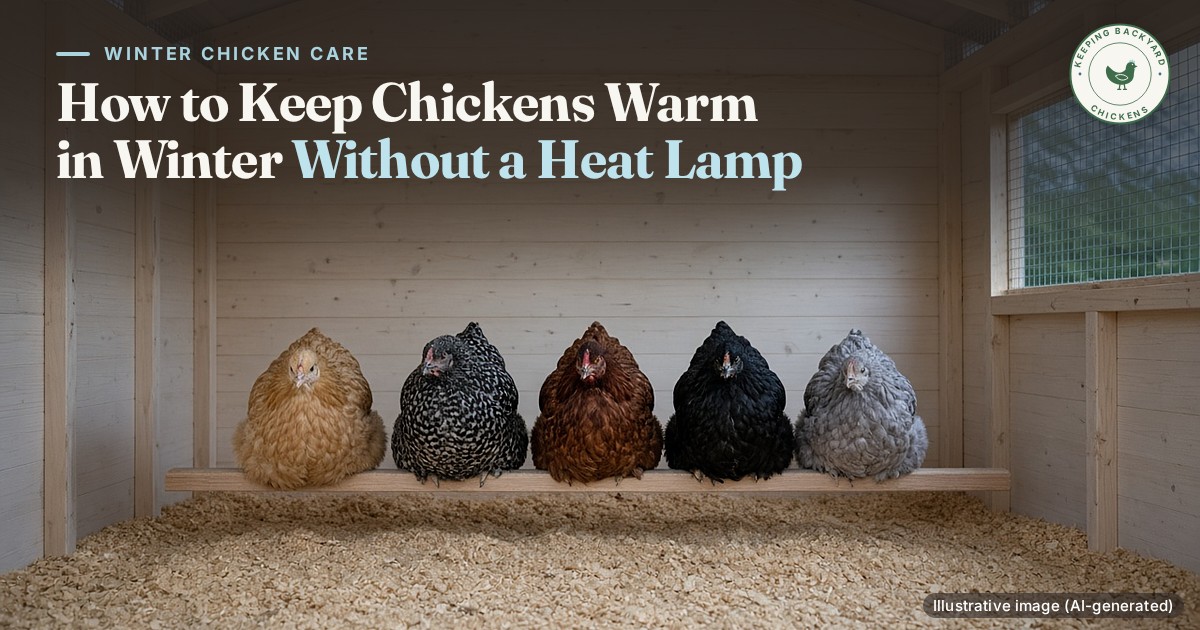
Usually, no. A chicken’s average body temperature is about 106°F, and those fluffy down feathers under the outer layer work like a built-in puffer jacket. When it gets cold, chickens fluff up to trap warm air, tuck their feet under their bodies on the roost, and snuggle together.
University of New Hampshire Extension puts it plainly: in most circumstances they advise against adding heat to a coop, because the fire risk is too high with dry bedding around and birds that knock things over. Ohio State’s winter fact sheet says the same thing a different way: cold-tolerant breeds that have adjusted to the weather, living in a dry, ventilated coop, don’t usually need supplemental heat.
What actually hurts chickens in winter isn’t the cold by itself. It’s cold plus wind, and cold plus moisture. Damp air in a stuffy coop is what sets birds up for frostbite.
One more thing: let your birds get used to the cold gradually. Ohio State notes that letting chickens acclimate as fall turns to winter builds up their natural tolerance. A flock that’s been kept toasty and then loses power during a cold snap is in a much worse spot than a flock that never had heat to begin with.
Why I’d skip the heat lamp
Heat lamps are one of the most common causes of coop and barn fires. They run hot, they hang over dry shavings and straw, and chickens are clumsy. One knocked lamp or one loose clamp is all it takes.
This isn’t a rare thing. The Kansas State Fire Marshal’s office recorded 164 reported heat lamp fires in Kansas alone from 2015 to 2024, and called out backyard coops specifically. The Extension poultry team’s frostbite article notes that coops, and some attached houses, are lost to heat lamp fires every year. It also points out that a heat lamp can mess with your hens’ light schedule.
There’s a quieter problem too. A heated coop makes birds less adapted to the cold outside it. If the lamp fails at 3 a.m. on the coldest night of the year, the temperature swing is harder on them than steady cold would have been.
So the short answer: skip the heat lamp. If you have a bird who truly needs extra warmth, there are safer options, and I cover them below.
It isn’t cheap to run, either. A standard red heat bulb is 250 watts (Tractor Supply listing). Twelve hours a night is 3 kWh. At the U.S. average home electricity price of about 18 cents per kWh in 2026 (EIA), that’s roughly 55 cents a night, or about $16 a month, to buy yourself a fire risk.
9 ways to keep chickens warm in winter (no heat lamp)
1. Block drafts where the birds sleep
Wind steals body heat fast. Walk around your coop and find the gaps, especially at roost height and lower. Ohio State suggests a simple trick: turn on a light inside the coop after dark and walk around outside looking for light leaking through cracks.
Seal those gaps, but keep the sealant and any spray foam where chickens can’t peck at it. If your coop has open wire sides, a heavy tarp or clear plastic panel on the windward side makes a good temporary wall.
2. Keep ventilation up high
This sounds backwards, but it’s the most important part. Chickens breathe out a lot of moisture, and their manure is about 70% water, according to University of Minnesota Extension. All that moisture has to go somewhere.
You want vents above the birds’ heads, so warm, damp air can escape without a breeze blowing across the roost. If you see frost or condensation on the walls or windows in the morning, or you smell ammonia, you need more airflow, not less. Cover every vent with hardware cloth so it doesn’t become a door for raccoons.
3. Keep the bedding deep and dry
A thick layer of pine shavings or straw (4 to 6 inches is the common recommendation) insulates the floor and gives birds a warm place to land when they hop off the roost.
Many keepers use the deep litter method in winter: instead of cleaning everything out, you stir the bedding so droppings work down, then add a fresh layer on top. UMN notes that composting manure gives off a little natural heat. The catch is that deep bedding can raise humidity, so stir it, add dry material often, and pull out wet clumps around the waterer.
4. Give them good wooden roosts
Roosts let chickens sleep off the cold floor and sit down over their feet. UMN recommends roosts at least 12 inches off the floor with about 9 inches of space per bird. A 2×4 laid with the wide side up is a favorite in cold climates because hens can cover their toes completely.
Skip metal or plastic perches. They hold the cold and can lead to frostbitten feet.
5. Feed them well (and add a bedtime snack)
Digesting food is how chickens make heat. UMN says flocks may eat up to 25% more in cold weather, so keep feeders full of their regular balanced layer feed.
A small handful of scratch grains in the late afternoon is a nice winter extra, since digesting it overnight produces heat. Just keep it small. UMN suggests no more than a handful per 10 birds, because scratch is a treat, not a meal. And keep grit available, since snow covers the pebbles they’d normally find.
6. Keep water from freezing
Chickens stop eating when they can’t drink, and a hen who isn’t eating can’t stay warm. Frozen water is the winter problem most keepers fight every single day.
You have two real options. You can swap waterers twice a day (rubber pans are great because you can flip them and pop the ice out), or you can use a heated waterer with a thermostat. I compared the main options in my guide to the best heated chicken waterers.
7. Make the run a nicer place to be
Chickens hate walking on snow. Shovel a patch in the run and toss down straw or old hay. Wrap the windward side of the run with a tarp or clear plastic (leave the top open for airflow), and give them a sunny, sheltered corner to hang out in.
A pile of hay or a pumpkin to pick at keeps them busy too. Bored, cooped-up hens are more likely to pick on each other.
8. Protect combs and wattles
Big single combs and long wattles are the most frostbite-prone parts of a chicken, especially on roosters. The best prevention is a dry coop, because humid air raises the frostbite risk.
Some keepers rub petroleum jelly on combs and wattles before a bitter night. UMN says it can help insulate them, but it doesn’t treat frostbite once it’s happened, and the Extension poultry team calls coop management the real key.
Skip this
- Wrapping the whole coop or run in plastic. It traps the moisture you’re trying to get rid of. Wrap only the windward side of the run and, as Ohio State warns, leave a gap at the top.
- The space heater from the garage, or anything propane. University of Maryland Extension calls gas heaters a fire hazard in a coop full of wood, bedding and feathers.
- Petroleum jelly as your frostbite plan. It may help a little on a bitter night, but the Extension poultry team says coop management is the real key.
9. Pick cold-hardy breeds next time
If you’re adding to your flock this spring, breed matters. Ohio State lists Australorps, Brahmas, Buff Orpingtons, Cochins, Wyandottes, Plymouth Rocks, Rhode Island Reds, Speckled Sussex and others as good winter birds. Heavier breeds with small combs, like rose or pea combs, handle cold best.
If you already have a mixed flock, watch how each bird handles the first cold snap. Birds with big single combs, like many Leghorns, are the ones to check first for frostbite. Hens that are molting, older or getting over an illness deserve a closer look too.
The hygrometer rule: how to tell if your ventilation is enough
Every winter guide says “ventilate, but no drafts.” Fair enough, but how do you know when you have it right? Here’s a simple test you can run all winter.
Hang a small digital thermometer-hygrometer at roost height, out of pecking reach. Read it at dawn, because that’s when coop humidity peaks. University of Kentucky’s poultry housing guide puts the target range at 50 to 70% relative humidity: below that air gets dusty, above it moisture and some germs build up.
- Dawn reading mostly under 70%, no frost on the walls, coop smells fine: leave everything as it is.
- Over 70% most mornings, frost or droplets on the inside walls, or an ammonia smell: open a high vent a bit more, pull wet bedding, and get the waterer off the floor or out of the coop.
- Under 40% and dusty: rare in winter, but if you see it, close a low opening partway. Keep the vents above the roost open.
Want a starting size for vents? Meyer Hatchery gives the common rule of thumb of 1 square foot of vent per 10 square feet of floor for warm weather, and says that in cold climates the openings should sit above the highest roost and be covered so snow can’t blow in. Treat that as a starting point and let the hygrometer tell you whether it’s working. Cheap sensors can be off by a few points, so watch the trend over a week rather than one reading.
If your winter is dry cold (high desert notes)
Most winter advice is written for wet, snowy places. Plenty of keepers deal with something different: dry cold, sunny days, freezing nights and wind. If that sounds like your winter, a few things change.
Reno, Nevada is a good example. In a normal January there, the high is 48°F and the low is 26°F, 26 nights fall to freezing, and humidity swings from about 76% at 6 a.m. to 38% at 3 p.m. (NOAA 1991 to 2020 normals for the Reno airport, summarized by PlainClimate). That pattern means:
- Water freezes overnight and often thaws by afternoon. The morning check is the one that matters. A dark rubber pan set in a sunny, sheltered spot helps, because it soaks up heat and won’t crack (University of Maryland Extension).
- A 20-degree swing between afternoon and dawn is normal. A coop that feels mild at 3 p.m. can be in the 20s by sunrise, so do your bedding and vent check at dusk, not in the warm part of the day.
- Dry air doesn’t mean a dry coop. Humidity still peaks near dawn, and hens add their own moisture all night. Go by the dawn hygrometer reading, not the forecast.
- Sun is free heat. Lots of sunny winter days make a south-facing window or a clear windbreak on the run worth more here than in cloudy places. UMD suggests siting the coop so winter sun gets in.
- Wind is the real enemy. Breezes are often light, but storm fronts bring strong gusts. Block the windward side of the run and check for gaps at roost height after every big blow.
- Dust builds up. Very dry bedding gets dusty, so pick low-dust, large-flake shavings and top up rather than leaving fine, broken-down litter.
Your coldest-night plan
When the forecast drops into single digits or a big wind is coming, here’s the whole routine. It takes about as long as a regular evening check.
Coldest night quick plan
- Before dark: high vents open, low gaps closed. You’re blocking wind, not air.
- Bedding: pull any wet patches (usually by the water) and add a fresh dry layer.
- Feed: fill the feeder, then toss a small handful of scratch per 10 birds about an hour before roosting time (UMN Extension).
- Tomorrow’s water: a spare rubber pan ready by the door, or check that the heated waterer is plugged into its GFCI outlet and running.
- At lock-up: count heads, then look at big single combs and any molting, sick or bantam birds. A bird that’s really struggling goes into a dog crate in the garage, not under a heat lamp.
Not on the list: heat lamps, space heaters, or sealing the vents.
Signs your chickens are too cold
Fluffed-up feathers on a cold morning are normal. That’s how chickens stay warm. Watch for these instead, which UNH and UMN both list as signs of cold stress:
- Birds huddled together and not moving around much
- Standing on one leg or holding a foot up against the body for long stretches
- Staying fluffed up all day, even in the sun
- Pale, gray or black patches on the comb, wattles or toes (possible frostbite)
- Eating or drinking less than usual
If you see these, check the coop first. Look for a new draft, wet bedding, condensation, or a frozen waterer. Fixing the coop usually fixes the bird.
When a chicken does need extra warmth
Some birds need more help: a sick or injured hen, a bird in a hard molt with bare patches, very small bantams, or young birds that aren’t fully feathered.
For a single bird, a common approach is to move her into a dog crate in a sheltered space like a garage until she recovers. If you decide your coop really needs heat, look for a radiant panel heater made for livestock or chickens, with a thermostat, mounted securely so it can’t be knocked over. UMN’s advice is worth following to the letter: use products approved for use around livestock, follow the fire warnings, keep cords away from birds and bedding, don’t run your coop on extension cords, and have an electrician install power to the coop.
What to do if you see frostbite
The Extension poultry team has clear guidance: warm the area slowly, and don’t use direct heat like a hair dryer or heat lamp. Don’t rub it. Don’t trim off blackened tissue, because it protects the healthy tissue underneath. Leave blisters alone.
Watch for infection signs like swelling, redness, discharge or a bad smell, and call a vet if you see them. If the other hens start pecking at the injured spot, separate her until it heals.
Your winter warmth checklist
- No drafts at roost level, but vents open up high
- Bedding 4 to 6 inches deep and dry
- Wide wooden roosts with room for everyone
- Feeders full, grit available, a small evening handful of scratch
- Water that isn’t frozen, checked morning and evening
- A sheltered, snow-free spot in the run
- A plan for a sick bird that isn’t a heat lamp
For the full coop prep list, from vents to predator-proofing, see how to winterize a chicken coop.
FAQ
What temperature is too cold for chickens?
There’s no single number. Healthy, acclimated adult chickens in a dry, draft-free coop handle temperatures well below freezing. Advice does vary: UMN suggests adding supplemental heat when the coop drops below 35°F, while UNH and Ohio State say most flocks don’t need it. Watch your birds’ behavior, keep the coop dry, and pay extra attention to bantams, sick birds and big-combed breeds.
Can chickens freeze to death?
It can happen, usually when birds are wet, sick, or exposed to wind with no shelter. A dry, draft-free coop with deep bedding and good roosts prevents nearly all of it.
Should I close up all the coop vents when it’s freezing?
No. Close off drafts at bird level, but keep the high vents open. A sealed coop traps moisture and ammonia, and damp air makes frostbite more likely, not less.
Is a heated waterer a fire risk too?
Any electrical device in a coop has some risk, and Ohio State notes that heated bowls can malfunction. A thermostat-controlled waterer from a known brand, plugged into a GFCI outlet with an outdoor-rated cord and kept off the bedding, is far lower risk than a heat lamp. It also only needs to keep water above freezing, not heat the air.
Do chickens stop laying eggs in winter?
Most slow down or stop because of shorter days, not the cold. UNH notes that laying slows when daylight drops below about 14 hours. You can add light on a timer, but many keepers let their hens take the winter off. I cover lighting in the coop winterizing guide.
Do chickens need a heat lamp at night?
No. Healthy adult chickens don’t need a heat lamp at night. They roost together, fluff up and cover their feet. A heat lamp adds fire risk and makes birds less adapted to the cold.
Featured image: illustrative (AI-generated).

Leave a Reply