
If you’re reading this with a bleeding hen in a box in the laundry room, you’re not overreacting. Feather pecking that draws blood can turn into something worse fast. The short answer: get every bleeding bird out tonight, check the light, the feed and the mites this week, and only then decide whether the problem is one bird, one breed or the whole setup. Rehoming birds one at a time without changing anything else is how people end up three hens down and still watching it happen.
This page is a triage card and a decision tree built from university Extension guidance. I’m not a vet, and nothing here diagnoses your flock. For deep wounds, a torn vent or a bird that won’t eat, call a poultry vet or your state diagnostic lab.
Tracy’s take
I’d fix the light, the feed and the boredom before I bought a single gadget, and long before I rehomed a whole breed. Gadgets treat the bird. The setup is usually what started it.
Tonight triage: the bleeding bird comes first
Here’s why tonight matters. UNH Cooperative Extension puts it plainly: once pecking draws blood, the bleeding attracts more pecking, not only from the dominant hen but from every bird in the flock. The Extension poultry team adds that cannibalism is a learned behavior, and because chickens imitate each other, one aggressive pecker can teach the rest. A bleeding hen left in the coop overnight is a lesson for the whole flock.
Tonight triage
- Pull every bird with broken skin or blood. A large dog crate in a quiet garage or shed works as a hospital pen: clean bedding, her own feed and water, no drafts. If you can place it where she can see the flock without being reached, you’ve also started the reintroduction (more on that below).
- Stop the bleeding and hide the red. Gentle, steady pressure with clean gauze. Rinse dirt out of the wound with clean water. University of Maryland Extension advises covering injured areas with a topical wound treatment and cleaning or hiding any blood, since blood draws pecking. Use a product whose label covers poultry, and read it for any egg withdrawal.
- Call a vet tonight if the bleeding won’t stop, you can see muscle or the wound is deep, the vent is torn, or she’s limp, cold or won’t hold her head up.
- Check the coop light. Is a bulb on in there? Did you add light this fall to bring eggs back? Extension guidance is no more than 16 hours of light a day, and very bright light makes birds hostile to each other. During an outbreak, dim it.
- Do a flashlight mite check after dark. Look at the vent feathers and the roost joints. Mississippi State Extension lists external parasites as a pecking trigger because pests make birds peck and injure skin. The mites decision tree walks through it.
- Look at the feeder before bed. Can every bird eat at once? If two bossy hens can guard it, the low hens go hungry, and the Extension poultry team notes underweight birds are frequent victims.
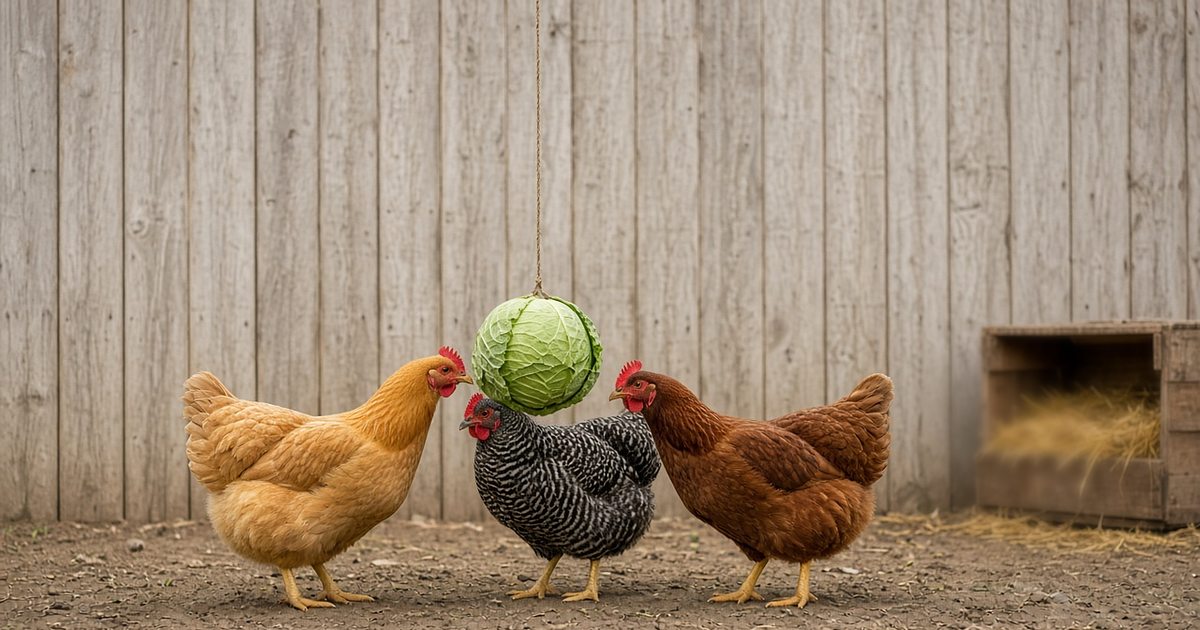
Tomorrow morning: scatter something to scratch for, and hang a head of cabbage or a few strings at eye height before you do anything else.
Is it really pecking? Rule out molt, mites and the rooster
Feather loss has more than one cause, and the fix is different for each. Spend five minutes on this before you start rearranging the flock.
- Molt: feathers drop whole and pile up on the coop floor, new pin feathers poke through, and nobody is chasing anybody. Molt doesn’t come with fresh blood. If your birds are bleeding and you can see them pulling feathers from each other, you can stop wondering about molt.
- Mites or lice: crusty, dirty-looking vent feathers, white egg clusters at feather bases, or birds that are restless on the roost at night. Red mites hide in cracks by day, so a noon check can miss them. See the vent-check decision tree.
- Rooster damage: bare patches on the back and the back of the head, mostly on his favorite hens, and in the spots he grips while mating. That’s a rooster problem, not a pecking problem, and the fix is different.
- Feather pecking: broken or chewed feather shafts, bald patches on the back, around the tail base or vent, and birds you can actually catch pulling. Blood on the skin or on other birds’ beaks means you’re past mild.
Score the damage so you know if it’s getting better
The Extension poultry fact sheet on feather pecking in small and backyard flocks gives a 0 to 4 feather score you can use without catching anybody. It turns “I think it’s worse?” into a number you can track.
The number that matters
2 square inches. In the Extension 0 to 4 feather score, a bare patch smaller than 2 square inches is a 2, larger is a 3, and several large bare areas or any broken skin is a 4 (the worst).
- 0: well feathered, little or no damage
- 1: feathers ruffled, body still covered
- 2: a bare patch under 2 sq. in.
- 3: bare areas over 2 sq. in.
- 4: several large bare areas and/or broken skin
Decision rule: any bird at 4, or any blood, goes on the severe path tonight. A flock where 2s and 3s are spreading week to week is severe even without blood yet. Mostly 0s and 1s is the mild path. Score every bird on the same day each week and write it down.
The decision tree: mild vs severe, one bird vs the whole flock
Path 1: Mild (scores 0 to 1, no skin showing)
Some pecking is normal. University of Maryland Extension describes mild feather pecking as part of how hens set the pecking order. You still want to act, because mild is where it’s easiest to stop:
- Add feeder and water space so every bird can eat at the same time (Extension poultry team).
- Make sure there’s enough roost space for everyone at once. The Extension sheet notes hens can escape vent pecking by perching where floor birds can’t reach them.
- Count nest boxes. UNH recommends one nest for every 5 hens, about 12 by 12 by 12 inches, private and dark inside.
- Break up the open run. UMD suggests leaning a sheet of plywood against a wall so a low hen can get out of sight.
- Add enrichment (details in the checklist below), then re-score in a week.
Path 2: Severe, and you can see who’s doing it
Both the Extension poultry team and Nebraska Extension list the same first step for an outbreak: separate the birds doing the severe pecking, especially if they’re going after wounds or vents. Take the pecker out, not just the victim. If the victim leaves and the pecker stays, the pecker simply picks a new target.
Give the separated pecker her own pen for several days and keep scoring the rest. If new damage stops, you’ve found your bird. Then you have three honest options: keep her in a permanent separate pen, rehome her with full disclosure to the new owner, or try a slow return after you’ve fixed the setup. Peepers (small blinders clipped to the beak) are sometimes used here, but UNH notes they’re mainly a game-bird tool and aren’t practical in layer flocks. Treat them as a last try before rehoming, not a first fix.
Path 3: Severe, and it seems like everybody is doing it
This is the hardest version and the most common one in the forum threads: you’ve rehomed birds, you still can’t find one culprit, and now the whole flock is pulling. That pattern fits what Extension writes about pecking as a learned behavior that spreads by imitation. Removing birds one at a time rarely fixes it, because the trigger is still in the coop and the habit is already in the flock.
The fix is a whole-flock reset, done all at once rather than one change a week:
- Dim the light. Nebraska Extension suggests about 0.5 to 1.0 foot-candles for reduced lighting, which it describes as just barely enough to read a newspaper. Pull any added white light back so the day stays at or under 16 hours (Extension poultry team).
- Pull every bleeding or bare-skinned bird until healed.
- Remove the new thing. A new bird, a new feeder, a move, a brooder set up in the corner of the coop. The Extension sheet lists abrupt changes, extra heat and bright light as separate triggers. A brooder in the coop can bring all three at once, plus a group of strange birds to stare at.
- Fix feed and enrichment (next section).
- Score weekly and give it a few weeks. UNH says enrichment helps by distracting birds long enough to break the habit, and habits take time.
How to find the perpetrator (when you can’t)
The Extension poultry team notes you don’t have to handle hens to monitor pecking. Watch instead, and watch at the moments when pecking peaks:
- Let-out in the morning, when birds have been packed together all night.
- Feeding time, especially when you toss treats.
- Right after a hen lays. UNH explains that vent picking happens just after an egg is laid, while the membrane is still exposed. It’s most common when hens start laying for the first time or come back into lay after a molt. Sit near the nests for a while.
- Look for evidence: a bird with feathers in her beak, blood on a beak or face, or one hen whose own feathers are perfect while everyone around her is bare.
- Test your suspect: pull her out for several days. If new damage stops, you have your answer. If it keeps going, it really is the whole flock, and Path 3 is your plan.
The rule-out checklist: light, space, protein, boredom, mites
Feed: protein, salt and how much scratch they’re really eating
The Extension poultry team links cannibalism to shortfalls in protein, sodium and phosphorus, and says feed short on protein, especially the amino acid methionine, will cause birds to pick feathers. It also notes very high-energy, low-fiber diets make birds more active and aggressive. In a backyard flock, the usual culprit isn’t the bag of layer feed. It’s how much of the day’s eating is scratch, bread and kitchen scraps instead of that bag.
- Make a complete feed, labeled for the age and type of bird, the main thing they eat. Read the tag.
- If you feed grains or scratch, the Extension sheet says to give them only in the afternoon, after they’ve eaten their regular feed, and only as much as they’ll clean up in 15 minutes.
- Homemade or all-grain diets can run short on salt. The Extension team explains that birds without enough salt overwork their own preen gland (the oil has a salty taste) and then start picking at other birds’ preen glands near the tail.
- Mash takes longer to eat than pellets. Both Extension and Nebraska note a mash diet may help, because birds spend more time sifting it.
Light
Extension guidance is no more than 16 hours of light a day, and never a very bright white bulb. If you added a coop light this fall to bring eggs back and the pecking started after, that timing is worth taking seriously. Extension lists excessive light and abrupt changes as separate triggers, and a new egg-light schedule can be both.
Space, feeders, roosts and nests
UNH’s list starts with floor space, feeder and water space, and nests, and adds that a little too much is better than not enough. Space isn’t always the answer, though. If your birds have plenty of room and are still pecking, move on to the other items instead of building a bigger run. Also walk the run for loose wire or sharp cut edges. Nebraska Extension notes injuries from pens in poor repair can start an outbreak, since a bird that bleeds draws pecks. Trim and fold the cut edges of hardware cloth, and skip chicken wire for any repair.
Boredom
A chicken’s natural day is mostly spent looking for food. When she can’t forage, the Extension team says that pecking can get redirected at flock mates. Things that help, from the Extension sheets:
- Four to eight lengths of white polypropylene twine hung in the pen. Move or swap them now and then so they stay interesting (Extension poultry team, Nebraska Extension).
- A head of cabbage hung at eye height, or a small amount of fresh greens daily (UNH). Remove greens they don’t finish so they don’t spoil (Extension poultry team).
- Straw, grass clippings or small grains scattered in deep litter to scratch through.
- Protected outdoor time in a covered run where they can hunt bugs and peck dirt.
Heat and parasites
Heat makes birds irritable and more likely to peck (Extension, UMD). In summer that means cool water and real ventilation. Any time of year it means checking for mites and lice, since Mississippi State Extension lists parasites as a pecking trigger. The mites decision tree has the night check.
Mixed flocks and new birds
The Extension team warns that mixing birds of different ages, breeds, colors or sizes that weren’t raised together upsets the pecking order. It also says birds without crests, beards or feathered legs may peck at flock mates that have them, out of curiosity. If the trouble started when new birds arrived, that’s your lead.
Before you get rid of all the Legbars
It’s a fair question when one breed seems to be in the middle of it. Breed does play a part. UNH and UMD both note that light breeds tend to peck more than heavy breeds, and the Extension sheet says feather pecking is partly heritable. Legbars are usually counted among the lighter, more active breeds, and many have a small crest, which can draw curious pecks of its own.
But UMD also says management likely plays an even bigger role than genetics. Swapping breeds won’t fix a bright light, a scratch-heavy diet or a crowded feeder. Run the whole-flock reset first and keep scoring. If a few weeks later the same birds are still the ones doing the damage, rehoming that group is a reasonable call, as long as the new owner knows why.
When to separate a chronic victim, and when to consider culling
This is the part nobody wants to read, so I’ll keep it plain. The Extension poultry team and Nebraska Extension both say victims of cannibalism should be removed and cared for separately or, if necessary, humanely euthanized. UNH notes severe injuries can end in culling or death. Most pecked hens heal. Some situations are different.
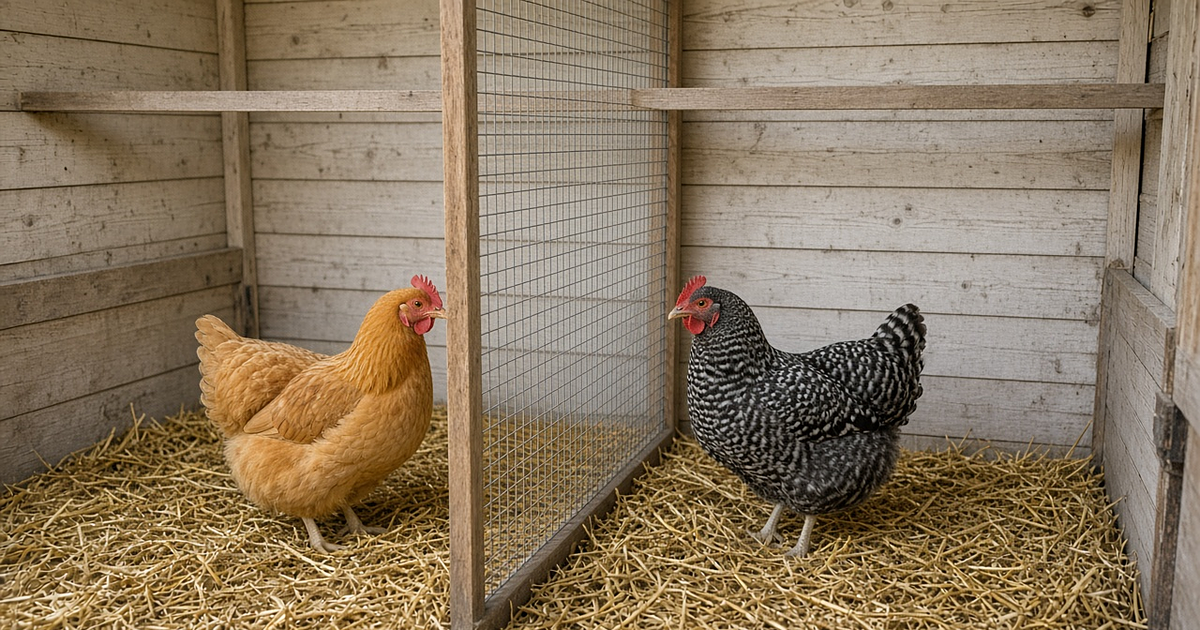
Separate and heal when the wounds are shallow, she’s eating and drinking, and she’s alert. Keep her out until the skin is closed and feathers are coming back in, then bring her back slowly. A bird returned with a scab or a bare red patch is a target again on day one. (The sister post on putting a healed hen back covers the side-by-side steps.)
Look harder at the victim herself when it’s always the same hen. The Extension team notes underweight and weaker birds are frequent targets, and flocks will peck at injured or impaired birds. A hen who is always picked on may be sick. That’s a good reason to have a vet look at her before you blame the flock.
Talk to a vet about euthanasia when wounds are deep or reach the vent or abdomen, she isn’t eating or drinking, or she’s been re-injured every time you’ve tried to return her and you can’t give her a permanent pen of her own. Humane euthanasia should be done by a vet or someone trained in an accepted method. Don’t improvise it. If you need help finding someone, your state diagnostic lab or county Extension office can point you.
And there’s a middle path that many keepers end up choosing: a permanent companion pen, a small hardware-cloth pen beside the run where the victim and one calm friend live within sight of the flock. It’s not a failure. It’s a decision.
Skip this
- Trimming an adult hen’s beak yourself. Extension sources treat beak trimming as a last resort done by trained people with proper equipment. Nebraska Extension says it should be done between 7 and 10 days of age, that it causes pain, and that bad trims can leave chronic pain and fail anyway. The Extension beak trimming fact sheet (hosted by Ohio State’s Ohio 4-H) notes older birds can have long-term pain in the beak stump. Clippers in the garage are not a fix.
- Leaving a bleeding hen in to “toughen up.” Blood draws pecks from the whole flock (UNH). Pull her tonight.
- Ignoring a small wound. A scab is a target. Clean it, cover it with a poultry-labeled wound product, and keep her out until it’s closed.
- Rehoming one bird at a time and changing nothing else. If it’s a learned, flock-wide habit, the next bird picks it up.
- Assuming the answer is always more space. If space is already generous, look at light, feed, mites and recent changes.
- Putting a healed hen straight back into the run. Plan a see-but-don’t-touch period first.
Deterrents and wound products: what Extension mentions
UNH mentions pine tar on wounds to discourage pecking, and oil of ipecac or Bitter Apple-type products on feathers to reduce feather picking. University of Minnesota Extension says a pick-paste remedy can work in small flocks if the problem hasn’t gotten out of hand. Nebraska Extension mentions an antibiotic wound spray on hens with vent injuries in small flocks. Whatever you use, pick a product whose label covers poultry, follow it, and check for egg withdrawal. These are helpers. They don’t fix the reason the pecking started.
When to call a vet or the lab
- Bleeding won’t stop, the wound is deep, or you can see muscle.
- The vent is torn, swollen or being picked.
- The injured bird won’t eat or drink, or seems limp or cold.
- The same hen keeps getting targeted and seems unwell otherwise.
- You’re thinking about euthanasia and want it done humanely.
If you can’t find a vet who sees chickens, your state veterinary diagnostic lab or county Extension office is the next call.
FAQ
Is some feather pecking normal?
Yes. UMD Extension describes mild pecking as part of how hens set their pecking order. It stops being normal when you see bare skin, blood or vent damage, or when the damage is spreading week to week.
Do pinless peepers work?
They’re designed to stop a bird from aiming a peck straight ahead. UNH notes blinders like these are used in game birds but aren’t practical in layer flocks. If you try them on one confirmed pecker, do it after you’ve fixed the setup, and watch that she can still find feed and water.
Will more protein stop feather pecking?
If the diet was short on protein or methionine, fixing it removes a known trigger (Extension poultry team). It won’t undo a learned habit on its own. Pair it with dimmer light, enrichment and pulling injured birds.
How long until it stops?
There’s no sourced timeline. Extension sheets agree that pecking is much easier to prevent than to stop once it’s a habit. Score weekly so you can see if your changes are working instead of guessing.
Can I put her back once she’s healed?
Usually, yes, but not straight into the run. Wait until the skin is closed and feathers are growing in, then give her time where the flock can see her but can’t reach her. The sister post on putting a healed hen back walks through it.
Sources
- Feather Pecking and Cannibalism in Small and Backyard Poultry Flocks (Dr. Jacquie Jacob, University of Kentucky, Extension poultry team)
- Feather Pecking and Cannibalism (University of Maryland Extension, from Mississippi State Extension)
- Cannibalism fact sheet (UNH Cooperative Extension with UConn)
- Cannibalism by Poultry, NebGuide G1670 (University of Nebraska-Lincoln Extension)
- Raising layer chicks and pullets (University of Minnesota Extension)
- Beak Trimming of Poultry in Small and Backyard Poultry Flocks (Extension fact sheet hosted by Ohio State University’s Ohio 4-H)
- Causes of pecking and cannibalism (Mississippi State University Extension)
Featured image: illustrative (AI-generated).

Leave a Reply